Anti-CGRP Migraine Therapy
Anti-CGRP Migraine Therapy
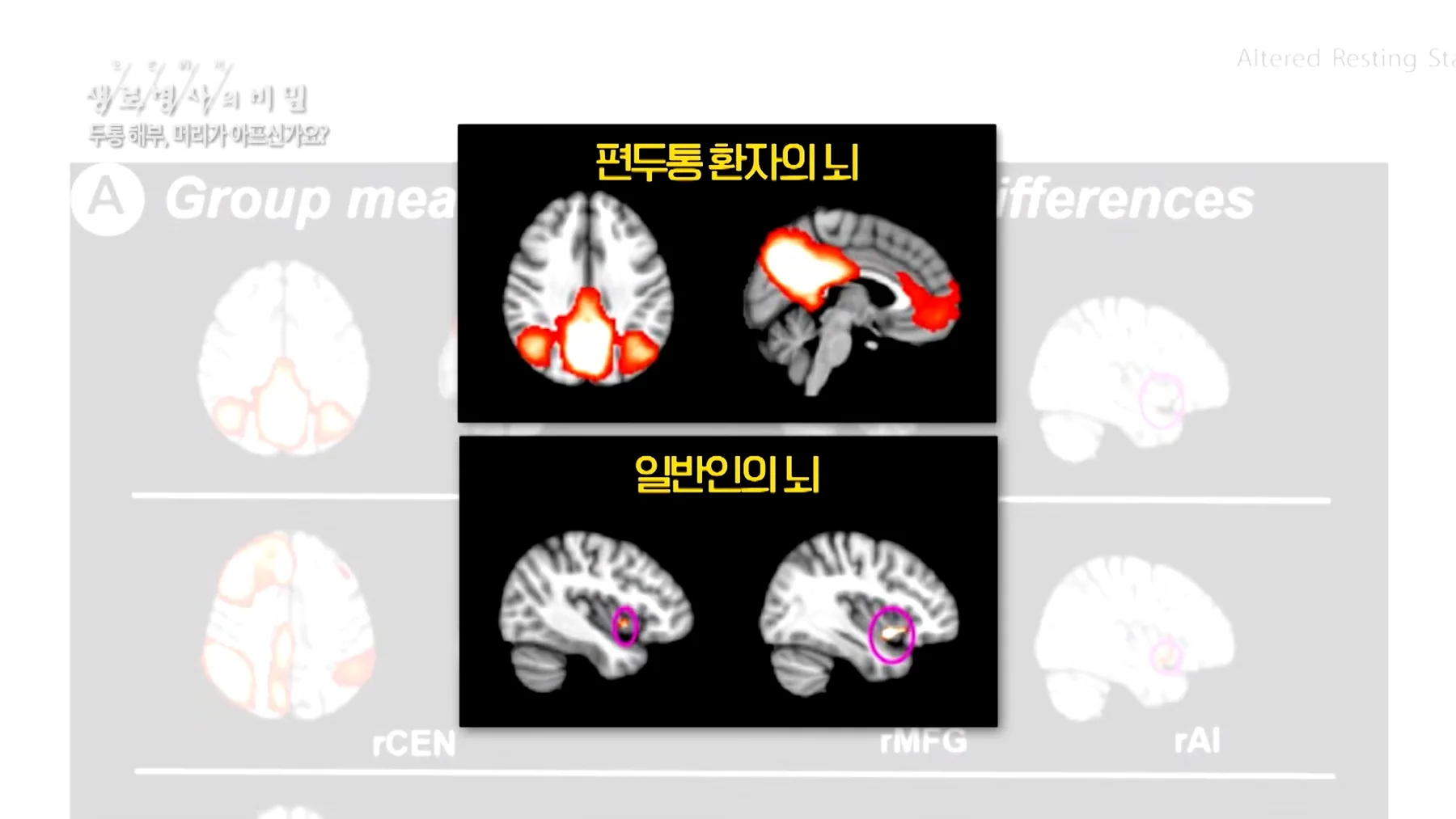
Source : KBS "The Secret of Life and Death"
Anti-CGRP antibody injection — what kind of treatment is it?
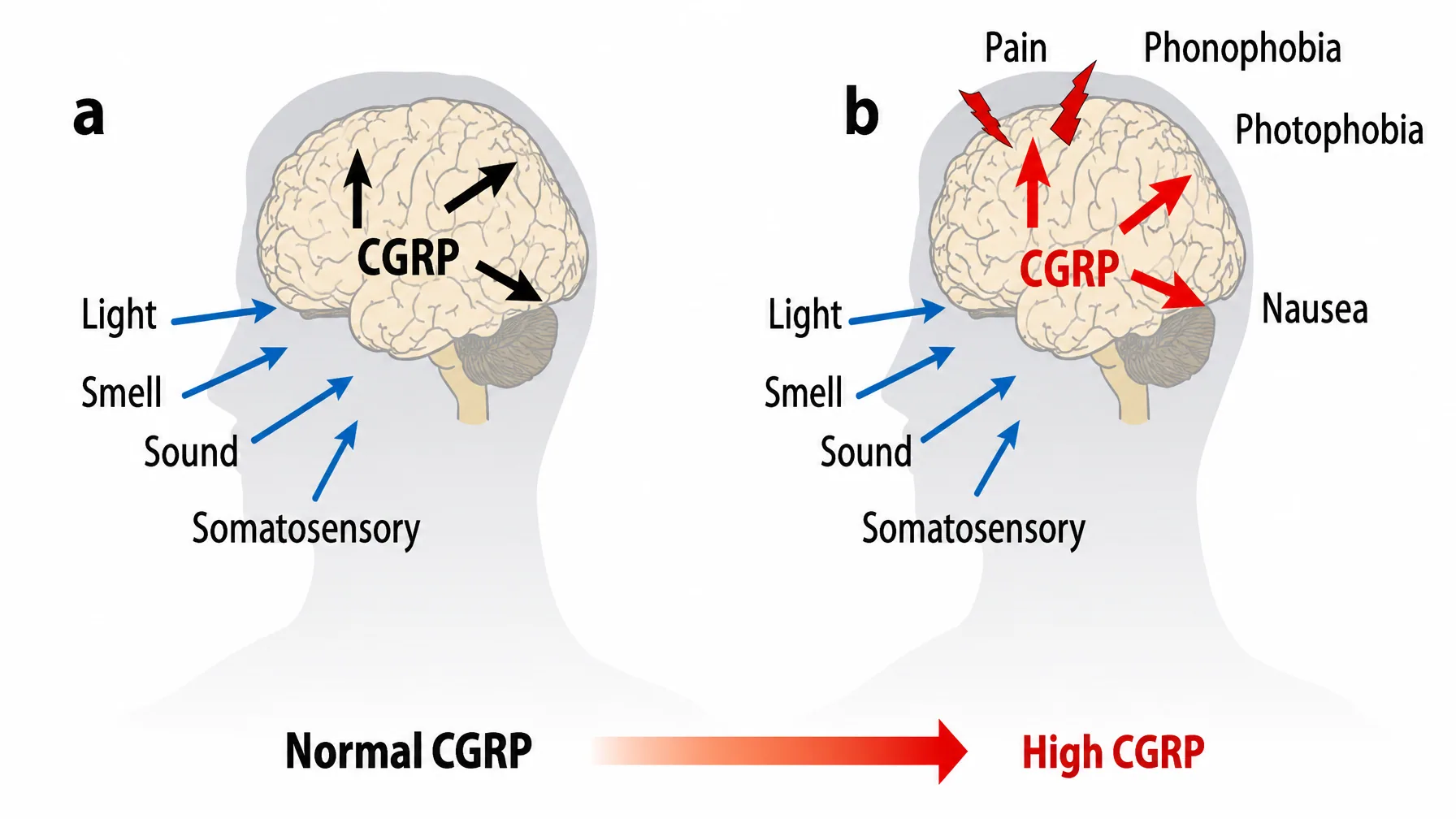
When a migraine attack begins, at the trigeminal nerve endings CGRPfloods out, dilating vessels and amplifying pain signals. Anti-CGRP antibodies bind to this substance and block that pathway.
If a painkiller suppresses pain that has already begun, this instead A preventive injection that makes headaches harder to start. It is the first targeted therapy developed specifically against the mechanism of migraine.
Who treatment is for and how it is given
Migraine on 4 or more days a month · Those for whom conventional preventives failed · Chronic migraine with pain on 15 or more days a month · Frequent users of analgesics
It is a subcutaneous injection you can give yourself once a month, and depending on the agent, some are given once every three months. In clinical trials, the proportion whose headache frequency and intensity fell by half or more was 60~70%.
The effect appears from one month onward.
Available in Korea Representative anti-CGRP agents
Galcanezumab과 Fremanezumabare available. Both are self-administered subcutaneous injections. We select medication by considering headache patterns and daily routines together.
Patients who do not respond to existing oral medication, or who cannot take it because of side effectsin particular.
| Galcanezumab | Fremanezumab | |
|---|---|---|
| Route of administration | A subcutaneous injection once a month | It can be injected once a month or once every three months |
| Effect | Reduces both the frequency and intensity of migraine attacks | Multiple clinical results show seizure days reduced by half or more with long-term administration |
| Features | It takes effect relatively quickly after administration with few side effects | The dosing interval can be matched to the patient's routine, making long-term use easier |
| Indications | Patients who do not respond to existing oral medication, or who cannot take it because of side effects | Patients who do not respond to existing oral medication, or who cannot take it because of side effects |
| Others | Also used in the treatment of cluster headache | Safety has been established to the extent that it can be given to children weighing 45 kg or more |
First-line migraine prevention — advantages of the treatment
By blocking migraine before the pain begins, A breakthrough treatment that restores quality of life diminished by frequent migraine.
It achieves a marked reduction in headache compared with conventional preventive treatment, with almost none of the drowsiness, dry mouth, memory disturbance, or swelling seen with older agents.
※ This is general medical information provided for understanding only. Whether and how to treat is determined by a specialist after examination, based on the individual patient's condition.